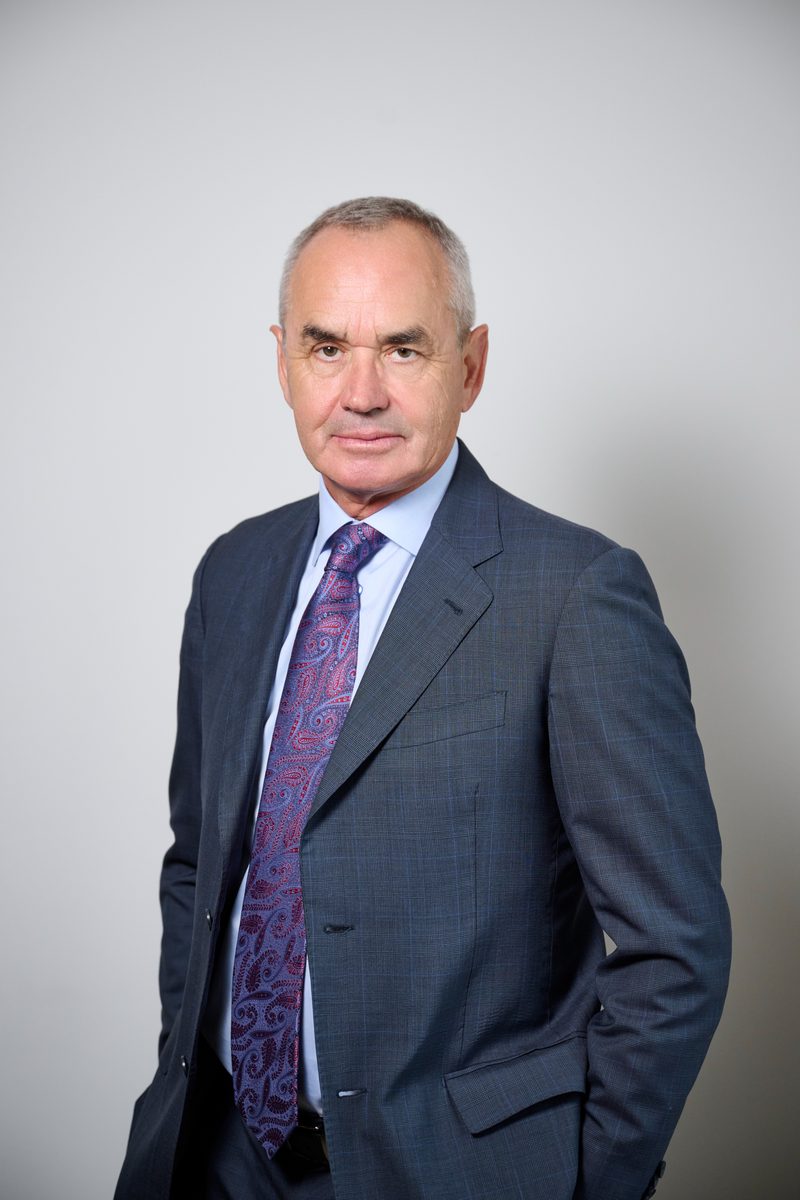
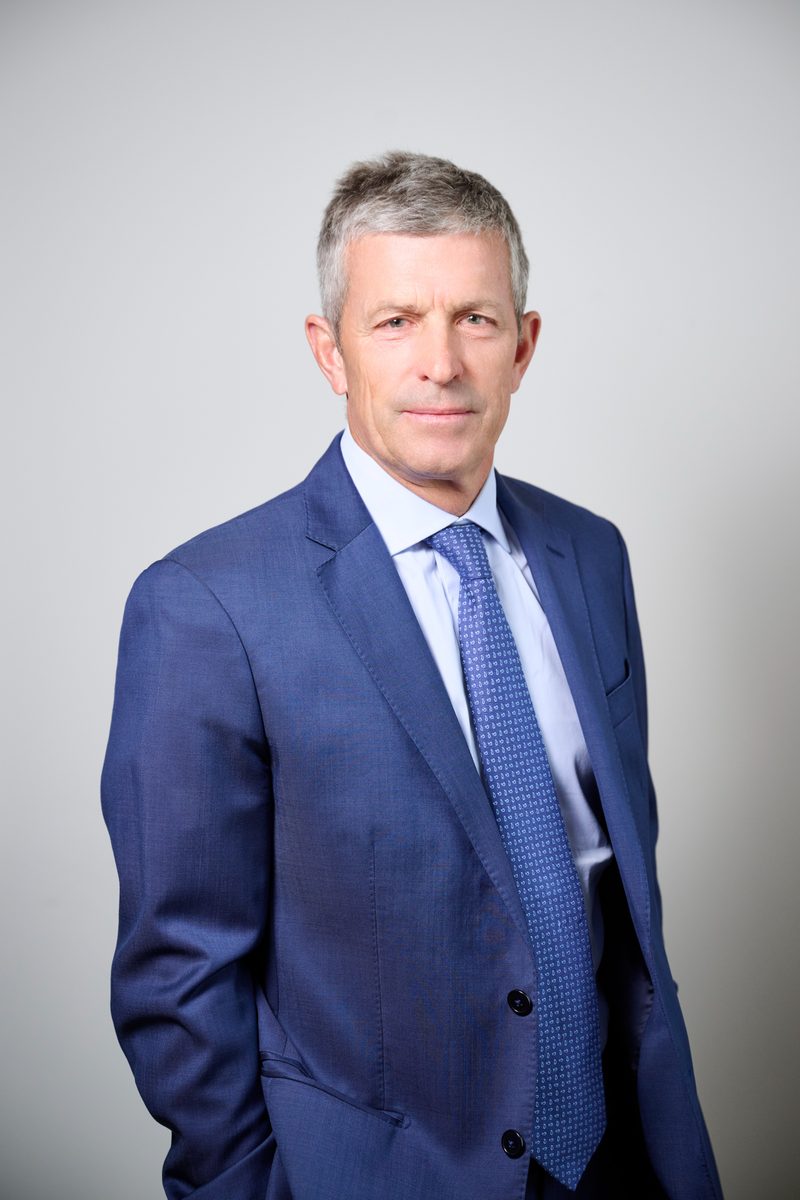
Alexandre Schneiter
Former Chief Executive Officer
Lundin Petroleum / Lundin Energy
These pages provide biographical information and personal background on the two individuals named in the proceedings.
The analysis of media coverage of the Lundin trial between 2023 and 2026 reveals a real evolution, but one more complex than a straightforward shift from an accusation-driven narrative to a defence-favourable consensus.
In 2023, coverage was overwhelmingly structured by the indictment, allegations of grave crimes, victims’ testimony and the exceptional symbolic significance of corporate executives being prosecuted for alleged complicity in war crimes. In 2024, the narrative became more courtroom-specific — defence challenges to the strength of the evidence began to surface in specialist coverage. In 2025, allegations of witness intimidation triggered a sharp return to accusatory framing in the Swedish general press, temporarily reversing the trend toward greater nuance. It was only in 2026, during the final pleadings, that the narrative genuinely pluralised.
The gold line, representing all media coverage, ends the trial at a near-neutral score (+0.07). It reflects what the ordinary reader encountered: an uncertain verdict, prison demands on one side, defence arguments on the other.
The blue dashed line represents the reporters who sat through the hearings in person over sustained periods — Martin Schibbye (Blankspot, Sweden) and the Swiss outlet Justice Info (Fondation Hirondelle, Lausanne), with Olivier Truc then Schibbye, plus Otto Klaar (Affärsvärlden) in the final phase. The subset is small by design: it is defined by presence, not headcount. It stays above the general press in every phase, and the gap is widest in 2025, when the general press was at its most accusatory while those in the room stayed near neutral. The same reporters scored the prosecution’s sentencing demand at the bottom of the scale (−2) and the defence pleadings at the top (+2) — they reported each phase faithfully, not in one direction. By 2026 a columnist with more than a hundred hours in the courtroom assessed acquittal as the more likely outcome. This is a journalistic assessment, not a judicial finding.
The courtroom and the newspaper pages did not cover the same trial. The general public followed a narrative constructed intermittently, shaped by prosecution milestones and intimidation allegations. The permanent observers followed a trial in which evidence was methodically contested, in which the prosecution’s dependence on NGO-derived material raised growing questions, and in which certainty about the outcome eroded hearing after hearing.
This study does not prejudge the verdict expected on 3 December 2026. It establishes that those who were in the room saw something different from those who read the newspapers — and that this gap widened over time.
Focus — the closing arguments, day by day
The chart above tracks four yearly averages. Here we slow down to the final phase and plot every individual article published during the closing arguments of spring 2026 — the prosecution’s closing (mid-to-late March) and the defence’s pleadings (May). Each marker is one dated, named article: the fill shows who wrote it, the ring shows which way it leaned. (JI = Justice Info, the Swiss in-court outlet.)
The clearest signal comes from the one reporter who covered the entire trial in person — Martin Schibbye (Blankspot, and the Swiss outlet Justice Info). During the prosecution’s closing he filed two pieces, both leaning accusatory (−1): the call for a ten-year sentence, and the summary of the prosecution’s conclusions. Six weeks later, covering the defence pleadings, the same reporter filed two pieces both leaning defence-favourable (+1): a detailed account of the defence’s case, and the “it should be easy to acquit” argument. The blue line rises from −1 to +1 — not because the reporter changed his mind, but because faithful reporting follows whichever side is speaking.
The rings make the pattern legible at a glance. Brown rings (accusation-leaning) gather on the left, under the prosecution’s closing; green rings (defence-leaning) gather on the right, under the pleadings. The green rings on the right sit on markers of every kind — the in-court reporter, the financial press, even an exclusive interview with the defendant — showing that the favourable framing of the closing weeks was broad, not the work of a single outlet.
Two honest qualifications. First, much of the financial press’s defence-favourable framing at the close turns on a money story — the roughly 820 million kronor the defence would claim from the state in the event of an acquittal — rather than on the legal merits. Second, the article of 28 May, shown off the curve in violet, is a neutral cost tally, not a swing back toward the prosecution; the line therefore stops at the defence pleadings. This focus view is illustrative — a small set of named, dated articles — not a statistical claim.
Read together, the two charts tell the same story at two scales. Across the whole trial, those in the room consistently saw something more contested than the general public read. Within the final weeks, the framing tracked the courtroom itself — accusatory while the prosecution spoke, favourable while the defence pleaded. Neither chart prejudges the verdict expected on 3 December 2026.
This study analyses retrievable news and specialist-media coverage of the Stockholm proceedings between September 2023 and 28 May 2026 — the close of hearings. Articles were located through outlet-specific searches and verified by date, title and accessible URL. Framing scores measure editorial emphasis rather than legal truth. Entries marked unavailable record unsuccessful verification attempts and are excluded from arithmetic averages. The study does not infer guilt, innocence or probable judgment from media framing. No verdict had been issued as of 1 June 2026; judgment is expected on 3 December 2026.
The in-court observer subset comprises reporters whose work shows sustained first-hand attendance at Stockholm District Court — Martin Schibbye (Blankspot, Sweden), the Swiss outlet Justice Info (Fondation Hirondelle, Lausanne; Olivier Truc, then Schibbye) and Otto Klaar (Affärsvärlden, Sweden). It is defined by presence in the courtroom, not by the number of journalists, and does not imply attendance at every hearing unless stated in a cited source.
The corpus was re-audited in August 2026. Four articles published in 2026 that had been grouped under Phase 3 were reclassified to Phase 4, and the phase averages were restated. The figures shown on this page are the ones in force: Phase 1 −0.67, Phase 2 −0.11, Phase 3 −0.63, Phase 4 +0.07, and +0.07 for the corpus as a whole at the close of hearings; the in-court observer average for Phase 4 is +0.35. Figures published before this date — including in the study announcement of 13 July 2026, which gave +0.36 for Phase 4 and +0.50 for the in-court subset — are superseded by those shown here.
Opening of the trial
Opening coverage was dominated by the historic scale and moral gravity of the prosecution. Headlines stressed war-crimes allegations, alleged forced displacement and the unprecedented prosecution of corporate executives. PAX and the longer NGO accountability narrative informed background explanations, especially internationally. Although denials by Lundin and Schneiter were reported, they generally appeared as rebuttals inside an agenda structured by the indictment, victims' claims and corporate-accountability significance.
Development of testimony and evidentiary disputes
In 2024 the narrative became less ceremonial and more evidentiary. Coverage focused on victims' testimony, the credibility of reports and witnesses, and the competing interpretive strategies of prosecution and defence. Some reporting reinforced the prosecution case through personal accounts of loss; specialist courtroom journalism began to note that defence lawyers were reported as challenging parts of NGO-linked reporting, obtaining increased editorial attention for evidentiary disputes and demanding greater precision about dates, locations and individual events.
Witness controversy and narrative tension
2025 coverage was dominated by defendants' testimony, witness-safety allegations and alleged intimidation — which produced a renewed accusatory wave in major Swedish outlets. At the same time, specialist reporting increasingly explored contested memory, disputed causality and the dependence of parts of the case on NGO-linked investigative pathways. Rather than a steady movement toward nuance, 2025 produced a temporary reversal of the 2024 trend.
Late 2024 to Spring 2026 — A Documented Pluralisation of Framing
The narrative shift did not occur through one decisive article or a sudden disappearance of accusatory reporting. Its first visible form appeared in late 2024, when courtroom observers reported defence lawyers successfully challenging the concreteness of allegations. That shift was temporarily obscured in 2025 by serious reporting on alleged witness intimidation. The turning point became unmistakable only in 2026 — Carl Bildt's testimony, business-press acquittal commentary and exceptional-cost framing marked the transition.
- Longitudinal courtroom reporting exposed evidentiary disputes largely absent from opening-day coverage
- Defence challenges to NGO-linked reports, witness consistency and causal specificity became reportable narrative material
- Carl Bildt's 2026 testimony supplied a prominent defence-compatible account in mainstream Swedish coverage
- Sentencing requests and possible reimbursement of extraordinary legal costs pushed outlets to present competing outcome scenarios
- Affärsvärlden published an explicit acquittal prediction; Dagens Industri gave prominence to the defence claim that the prosecution lacked evidentiary support
Closing arguments and outcome pending
The final phase produced the most pluralised framing in the corpus. Reporting still amplified the prosecution's request for lengthy prison sentences, but it also gave prominence to Carl Bildt's evidence, the defence attack on proof, the extraordinary cost of the proceedings and the possibility of acquittal. One Affärsvärlden columnist explicitly predicted acquittal after extensive courtroom attendance, while Dagens Industri prominently quoted defence confidence. Swiss coverage also entered the corpus in this phase, with Le Temps and Blick reporting the proceedings for a Swiss readership. Mainstream reporting nevertheless continued to treat the outcome as unresolved.
International coverage on the eve of the verdict
The scored corpus above closes on 28 May 2026, at the end of hearings. This separate section logs notable international coverage published between the close of pleadings and the verdict expected on 3 December 2026. It is kept for transparency and does not enter the phase averages: folding it into the corpus would mix post-hearing coverage into a grid built around the course of the trial.
On 25 June 2026, Bloomberg Businessweek devoted a long-form “Big Take” to the case — the most visible international piece since the close. On the study’s scale its editorial framing is accusatory (−1); it is recorded here as such, without softening. Logging it openly, rather than setting it aside, is exactly what this study’s method requires.
On 6 July 2026, Bloomberg published a correction to this article, revising four points: the attribution of the estimated death toll, now credited to human-rights organizations; the description of the group’s corporate structure; the account of an attack on a construction crew, now attributed to rebel forces; and the time frame of the defendants’ remote participation, now limited to the final year of proceedings. The correction note appears at the foot of the article, at the same URL. The score recorded above is unchanged: the corrections bear on factual points, not on the editorial framing this study measures.
Outside the corpus window (Sept 2023 – 28 May 2026). Score shown for scale consistency, excluded from phase averages. Section updated until the verdict.
On the witness-threats strand, the case file is clearer than the narrative: the separate investigation opened in 2018, in which both defendants were suspects, was closed in 2023 for want of sufficient evidence that an offence had been committed. More broadly, even this coverage — among the most authoritative, and accusatory in frame — reports the defence’s central arguments: the Talisman precedent and the evidentiary fragility tied to the “fog of war”. The gap this study documents — between the dominant narrative and adversarial scrutiny, here between narrative and the state of the file — thus reappears even in post-hearing international press. The 6 July correction makes the same point from within: even at the most authoritative outlets, coverage remains a narrative to be checked against the procedural record. An unfavourable article is adverse coverage to be contextualised — not a judicial finding; no verdict has been rendered.
The proceedings in brief
This study measures how the case was reported. Readers arrive with prior questions about the case itself, which media coverage answers unevenly. The answers below are the official positions of Orrön Energy — the successor company to Lundin Energy — reproduced here in the language in which they were issued. They are attributed to their source and are not the analysis of mediaimpact.ch, which takes no position on the outcome. In the answers, “the Company” refers to Orrön Energy, formerly Lundin Energy. No verdict has been issued; the presumption of innocence applies.
01What stage has the case reached, has any court reached a decision, and what happens next?
In November 2021, the Swedish Prosecution Authority brought criminal charges against the former representatives of Lundin Energy, Ian Lundin and Alexandre Schneiter, in relation to the Company’s past operations in Sudan from 1999 to 2003. The trial at the Stockholm District Court started in September 2023 and ended in late May 2026 after more than 2.5 years of proceedings. The court has announced that a verdict is expected on 3 December 2026. No verdict has been issued and the presumption of innocence applies.
02What exactly are Ian Lundin and Alexandre Schneiter accused of?
The case concerns allegations of complicity in crimes against international humanitarian law linked to the Company’s historical business activities in Sudan — from 1999 to 2003 in respect of Ian Lundin, and from 2000 to 2003 in respect of Alexandre Schneiter. Ian Lundin and Alexandre Schneiter are former representatives of Lundin Petroleum / Lundin Oil, a predecessor of Lundin Energy, which conducted petroleum exploration activities in Sudan as part of an international consortium together with Petronas, OMV and Sudapet. The prosecution claims that certain business decisions and activities contributed to circumstances in which alleged crimes against international humanitarian law could take place, and that Ian Lundin and Alexandre Schneiter were either aware of, or at least indifferent to, the risk that such crimes could be committed. Ian Lundin and Alexandre Schneiter are not accused of personally having committed any crimes against international humanitarian law.
The Company and its former representatives firmly reject these allegations and are fully convinced that neither the Company nor its former representatives has committed any wrongdoing. There is nothing that has been presented during the proceedings that constitutes evidence to the contrary. Throughout the process, the Company has raised concerns about the legal basis of the case, including the vague allegations against the individuals and the reliability and credibility of the reports and testimonies that form the basis of the case.
An article summarising the defence position is available on Justice Info.
03What sentences has the prosecution requested, and what does such a request mean at this stage?
The prosecutor is seeking 10 years’ imprisonment for Ian Lundin and 6 years’ imprisonment for Alexandre Schneiter. The trial concluded on 28 May 2026, and the verdict is expected on 3 December 2026. As of now, no criminal liability has been established, and the presumption of innocence continues to apply.
04What is the financial claim made by the prosecution, what is it based on, and what is the position of the defence?
The prosecutor has brought claims against Lundin Energy (today Orrön Energy, “the Company”) for a corporate fine of MSEK 3.0 and forfeiture of economic benefits of MSEK 2,381.3, which, according to the prosecutor, represents the value of the gain of MSEK 720.1 that the Company made on the sale of its interest in Block 5A in Sudan in mid-2003. Any potential corporate fine or forfeiture of economic benefits can only be imposed after a final adverse judgment in the proceedings against the Company’s former representatives.
The Company refutes that there are any grounds for allegations of wrongdoing by any of its former representatives, and sees no circumstance in which a corporate fine or forfeiture could become payable.
05Who sat on the board of Lundin Oil during the period covered by the case, and are any former directors party to the proceedings?
Between 2001 and 2003, the following individuals served on the Board of Directors at various times: Ian Lundin, Ashley Heppenstall, Alexandre Schneiter, Carl Bildt, Magnus Unger, Adolf Lundin, Kai Hietarinta, Lukas Lundin and William Rand. Of these individuals, only Ian Lundin and Alexandre Schneiter are defendants in the criminal proceedings.
06What is the relationship between Orrön Energy and the events of 1997–2003, and is the company a defendant?
The underlying allegations relate to historical petroleum exploration activities undertaken by predecessor companies of Orrön Energy, which took place nearly 30 years ago. Orrön Energy (“the Company”) is not a defendant in the criminal proceedings, and no criminal charges have been brought against the Company. The criminal proceedings concern the Company’s former representatives, Ian Lundin and Alexandre Schneiter. In connection with those proceedings, the prosecutor has brought claims against the Company for a corporate fine and forfeiture of economic benefits. These claims are contingent on the outcome of the criminal proceedings and can be imposed only after a final adverse outcome in the case against the former representatives.
07What did the company actually do in Block 5A between 1997 and 2003?
The Company conducted early-stage exploration activities in Block 5A, together with desktop geological studies. The Company never produced any oil or gas from the block and sold its interest in 2003. During its time in Sudan, the Company contributed to a range of programmes that benefited local communities, including improving access to clean water and establishing schools and educational programmes. Further detail is published on lundinsudanlegalcase.com.
08Did the company build or finance infrastructure in the concession area?
Yes. The Company made several infrastructure investments during its time in Sudan for operational reasons, which also benefited local communities. Further detail is published on lundinsudanlegalcase.com.
09What is the company’s position regarding the alleged conflicts in Block 5A?
The Company rejects allegations that its activities contributed to or encouraged conflict during its time in Sudan. On the contrary, the Company consistently advocated for a peaceful resolution to any conflicts, a position which has also been supported by evidence presented during the trial.
Block 5A covered a very large area, roughly the size of Belgium, while the Company’s activities were concentrated in only a limited part of the block. Accessibility was also severely constrained by seasonal conditions. During the rainy season, large parts of the area became inaccessible, including the Thar Jath drilling site, which was at times inundated by water. These conditions are relevant when assessing allegations concerning events said to have occurred in particular locations and at particular times, including during periods when access to those areas would have been extremely difficult or impossible.
10What is the “Unpaid Debt” report, and what status does it have in the proceedings?
The Swedish Prosecution Authority has cited the European Coalition on Oil in Sudan (ECOS) report from 2010 (“Unpaid Debt”) as the reason for opening the preliminary investigation in 2010. The report was produced seven years after the Company left Block 5A, and numerous factual errors and concerns have since been raised. The Company’s concerns about relying on NGO reports, including this report, as evidence in court are set out on lundinsudanlegalcase.com.
Source: Orrön Energy, official responses, August 2026, published here with the company’s agreement. Hyperlinks to the company’s own case site have been added by mediaimpact.ch.
Scope & limitations
This page is analytical journalism, not legal advice or judicial determination. The media framing analysis covers publicly retrievable articles only — coverage gaps exist, particularly for Swiss and international outlets. For complete trial documentation and official case materials, consult lundinsudanlegalcase.com. For a detailed legal analysis of the evidentiary issues, see A Report on the Lundin Case, commissioned by Lundin Energy's board and prepared by international lawyers.